Here's a snippet of my artist statement for the midterm project:
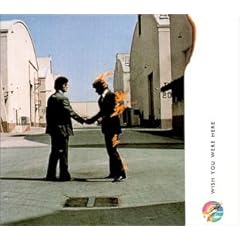
As I embarked on my research, however, I realized that Pink Floyd wasn’t always considered a psychedelic rock group. I came across several sources that seemed at odds with one another in terms of the musical genre that defined Pink Floyd. Some described the band as a psychedelic rock band, some used the term “space rock,” probably referring to their fanciful sound and science fiction-related lyrics, while others described Pink Floyd as a “progressive rock” group. All these terms seemed to be used interchangeably. At that point, I was confronted with a series of questions: Is Pink Floyd a “psychedelic rock” or “progressive rock” group? When and how did Pink Floyd evolve from a psychedelic band into a progressive rock band? I thought these questions were worth exploring, and so I modified my project and decided to create an album timeline in addition to a brief history of Pink Floyd, in hopes of tracking the musical evolution of the group and thus defining the group’s musical genre. I chose five Pink Floyd albums: (1) Piper at the Gates of Dawn (1967), (2) A Saucerful of Secrets (1969), (3) The Dark Side of the Moon (1973), (4) Wish You Were Here (1975) and (5) The Wall (1979). I figured that I should pick albums that fall across a wide range if I was ever going to see how or if the music evolved over time. Therefore, I made it a point to pick earlier albums like Piper and Saucerful, in addition to later albums like Dark Side and The Wall. I leave one slide for each album, with the exception of The Dark Side of The Moon (which I will focus on in my final), outline which members contributed to the album and include a few key points about the album’s overall sound.
In the end, I concluded that Pink Floyd did not belong to any one musical genre. Although critics have marked Pink Floyd’s shift from a psychedelic rock group to a prog rock group with the release of A Saucerful of Secrets, it is important to note that the group never really shed their psychedelic roots, but fine-tuned them instead. After all, psychedelic rock is typically characterized by electronic guitars, keyboard, studio effects like panning, exotic instrumentation, instrumental solos and whimsical lyrics, characteristics that are all seen in both earlier Pink Floyd albums like Piper at The Gates of Dawn and A Saucerful of Secrets, and later albums such as The Dark Side of the Moon and Wish You Were Here. Although they are two separate terms, “progressive rock” has a lot in common with “psychedelic rock,” each characterized by experimentation with electronic keyboards, synthesizers, and electronic effects, ambient soundscapes and whimsical lyrics. The major difference is that progressive rock lacks a steady rhythm and melody. This would explain why Saucerful was considered a shift towards progressive rock, because it is “looser of harmony,” as stated by Toby Manning, author of The Rough Guide to Pink Floyd. Moreover, progressive rock is typically characterized by elaborate lyrics that make some sort of social commentary or lyrics that reflect personal struggle. These types of lyrics were seen in earlier Pink Floyd albums, but they were really showcased in later albums like The Dark Side of the Moon and The Wall.
Even so, The Dark Side of the Moon was still considered a psychedelic album. According to Ian MacDonald, The Dark Side of the Moon represented a “committed psychedelic band.” Nevertheless, the direct, straightforward lyrics of Dark Side helped the group shed their “space rock” label and signaled a shift towards progressive rock. Therefore, the music was not a mirror reflection of the tumultuous history of Pink Floyd, and although the music changed slightly with the departure of Syd Barrett, there are psychedelic aspects of the music that have maintained throughout most of their albums. The slight changes can be attributed to the newer technologies that emerged with time, such as new electronic instrumentation, synthesizers and electronic effects. Consider one of the later albums, The Wall, which experiments with “orgies of orchestration, bipping, parping, electronics, and whole layered, wedding cakes of backing vocals” (Manning 171). Moreover, The Wall exhibits a variety of sound effects, much like Dark Side, such as “helicopters, aeroplanes, Waters’ deranged Scottish screaming, babies crying, groupies gushing, and that constantly squawking television” (171). Rolling Stone writer Loyd Grossman has his own definition:
Four musicians with a command of electronic instruments who wield an arsenal of sound effects with authority and finesse. While Pink Floyd's albums were hardly hot tickets in the shops, they began to attract an enormous following through their US tours. They have more recently developed a musical style capable of sustaining their dazzling and potentially overwhelming sonic wizardry.
If I had to define Pink Floyd, I would take Grossman’s route and say that the members of Pink Floyd were sound wizards who mixed bold electronic instruments and intense sound effects with meaningful lyrics.